How Far Can a Single Human Go?
Human history is the story of limits being mistaken for laws. Every generation inherits a new lever. Every generation discovers that the boundary was further away than it seemed.
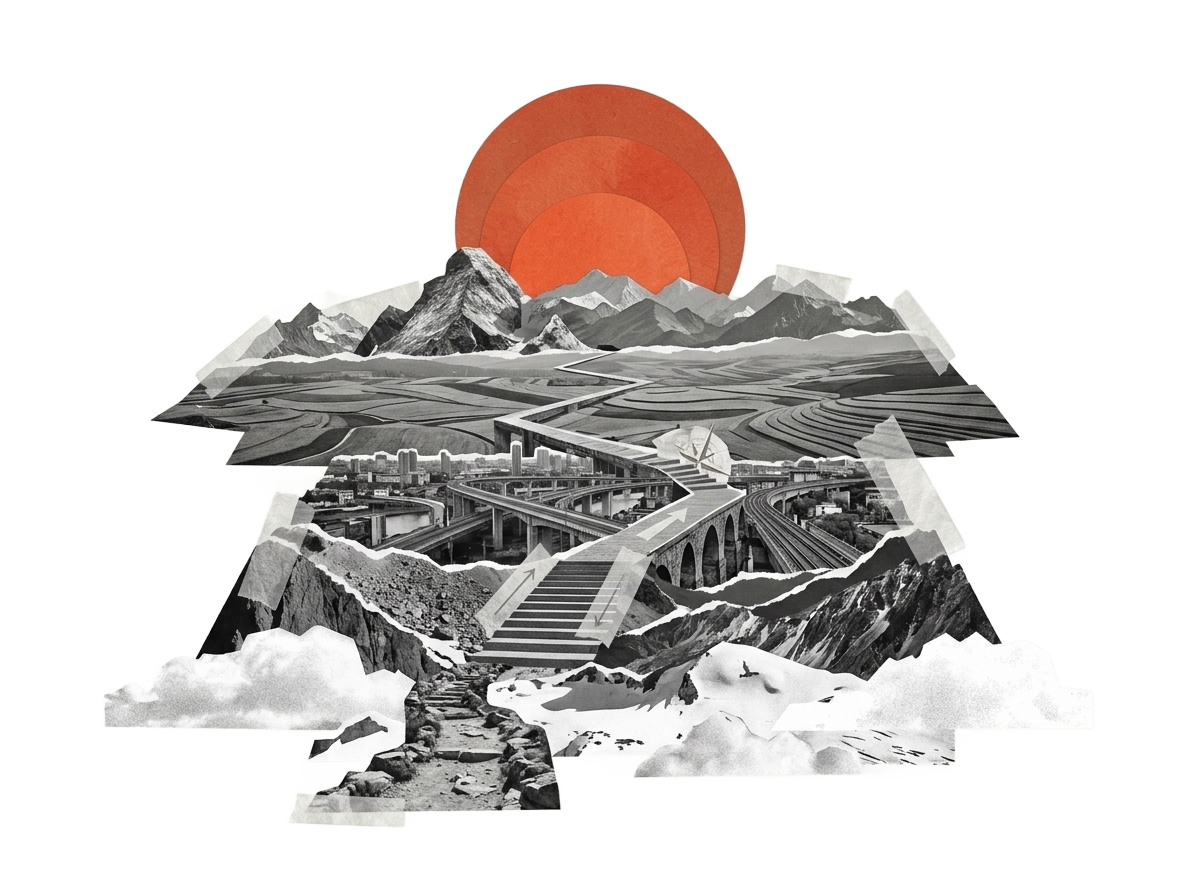
Human history is the story of limits being mistaken for laws.
Every generation inherits a new lever. Every generation discovers that the boundary was further away than it seemed.
Yet the world remains full off excuses why something cannot be done.
- "It's impossible"
- "That's unrealistic"
- "Others have failed trying"
- "Nobody does that"
The Illusion of limits
Remember when you were a kid? All the dreams and ideas that seemed perfectly possible at the time. And even when you shared them, you rarely considered something impossible.
Many of us simply didn't know where the boundaries were, and imagination filled the gap with optimism. Some of us were brave and tried, even with the risk of unpleasant outcome. Others chose certainty over exploration.
And neither part is free from consequences.
And don't mistaken it as absence of learning in either of groups. Each scenario has provided valuable lesson and some provide consequences faster than the others.
I always wondered if we're born with default settings that requires curiosity to kick in or if evolution works against the best ourselves. Let me explain.
The purpose of evolution is survival on average. In order to survive on average, your curiosity and risk level have to be on rather mediocre level.
The safest (and/or comfortable) path rarely provides what is needed to expand the boundaries of what is possible. And as a result, you cannot be the best version of yourself. You are a version that survives the longest.
Going back to when you were a child. Children don’t need to learn possibility. They need to learn limitations.
The question is when do limitations start holding us back.
Some limitations are real.
You cannot ignore gravity.
You cannot survive without food.
You cannot ignore where you came from.
But many of the limitations are not laws. They are beliefs, or boundaries to be turned to strengths.
- At one point, most of humanity believed we will never fly.
- At one point, most of humanity believed we will only ride horses.
- At one point, most of humanity believed we will only live in cold caves.
- At one point, most experts believed a computer would never beat a world chess champion.
- At one point, most of humanity believed internet is just another bubble.
The pattern repeats throughout history. A limit is declared. Most people accept it.
But there are also curious ones that question it and they move the boundaries. Not just beyond the limit - but sometimes far beyond it.
And then what was impossible quickly becomes obvious. There is a great saying, almost a joke: "Don't say it's not possible because there is at least one person who doesn't know it's not possible and will do it."
The most interesting thing is that it never stops.
Every generations laughs at the limitations of the previous one and never think about the ones they accepted.
So asks yourself:
- What assumptions about your life, your work, your ambitions or your future have you accepted?
- And if someone would give you the exact steps you need to do and told you that in 5 years you will be where you want to be with 95% certainty, would you do it?
Write both answers down and return back to them once you finish reading.
The question is whether the limits you accept are laws of reality or simply beliefs inherited from someone else.
What are limitations accepted today?
I still remember Top Gear being sceptic about Tesla Roadster (first electric car I remember). I remember journalist being sceptic about mobile phones. I remember economists being sceptic about internet.
All of it is daily life now. These old boundaries have been championed by those who took boundary as a challenge and not as a law of reality. They turned those boundaries into strengths.
Now we live in time where we watch two rather large boundaries being pushed to acceptance.
Both of them equally fascinating. In twenty years, both of them will look obvious - same as mobile phone, Google and electric cars do look obvious today - but they do not today.
They are Intelligence and Space Travel.
For thousands of years, intelligence was scarce. If you needed lawyer, teacher, strategist, programmer, translator, you needed human.
Today, intelligence is becoming abundant. For first time, a teenager with a laptop or a phone can access expertise that required entire organisations.
And for Space Travel. For thousands of years, humanity was confined to one planet. Today, we have reusable rockets, we are seriously discussing base on Mars, or even data centers on Moon.
But what is fascinating in this concept is actually not the technology itself.
What's fascinating is what happens when ordinary people gain access to extraordinary leverage.
And history suggests we consistently underestimate the answer.
The Power of Leverage
The question is not only how far can a single human go.
The question is how far can a single human go, with the right leverage and dedication.
Through the history, progress came from new levers. Fire expanded survival. Writing expanded memory. Print expanded ideas. Steam expanded muscle. Computers expanded calculation. The internet expanded reach.
Intelligence is expanding itself. And Space Travel and exploration is expanding imagination beyond our current comprehension.
The Human Behind The Lever
But even with all the leverage, there is an important piece of puzzle.
Fire did not create civilisations - people leveraging fire did. The internet did not build companies - people leveraging internet did. AI will not change the world - people leveraging AI will.
The question is not if intelligence becomes abundant. The question is what you choose to do with it.
Leverage and tools are simply not enough.
You have to become best version of yourself. And you need to understand it's a process with no ending.
It's You vs You.
And here is the thing.
Most people want just the reward. Very few people want to know the process. Everyone wants to stand on the summit. Very few people want to climb the mountain.
And even less people are willing to choose mountain that no one else wants to climb.
The uncomfortable truth? If you want to truly understand how far can a single human go, you need to be in the category of choosing mountains no one else wants to climb.
It doesn't necessarily mean selecting extremes.
Be realistic but challenge yourself.
Select mountains no one else in your current circle wants to climb.
Mountains
When I mention mountains, I don't mean literal mountains. It's a metaphor.
I mean challenges that are challenging enough and worthy of your effort.
An effort that is worthy of your valuable time even if you don't reach the summit.
The mountain isn't the full point. The person you become while climbing it is.
The mountain is the leverage you use to see how far you can go.
But beware of choosing a summit instead of mountain.
Many people would think that becoming rich is a mountain. Money is just leverage. The mountain is financial freedom.
Some would choose Moab 240 or finishing marathon as a mountain. You should choose "becoming physically exceptional" instead.
See what is happening? It's not about reaching the goal, it's about your own change and becoming better version of yourself.
If we go back to intelligence we've mentioned before.
You have the leverage using AI. You can build your plan. You can discuss your plan. You can monitor your plan. You can track your progress. You can get advise.
All of a sudden, you're doing the work of many. You leveraged technology to understand how far a single human can go.
The Trap
The trap isn't obvious at the beginning.
But it hits hard when it comes. Really hard.
The reason the trap is so dangerous is that it doesn't feel like a trap.
For years we convince ourselves that the summit will change everything.
- When I become successful ...
- When I make enough money ...
- When I reach that title ...
- When I finish that race ...
- When I build that company ...
- When ...
The summit then slowly becomes more than an achievement. It becomes a destination. We stop seeing it as a waypoint and start seeing it as the answer.
Then one day we arrive. And reality hits a simple question: "Now what?"
Most people never prepare for that moment. They spend years planning how to reach the summit and almost no time thinking about what happens after.
That is why achievement can sometimes feel strangely empty.
Not because the achievement wasn't worthwhile. Because we expected it to answer a question it was never designed to answer.
A title cannot tell you who you are. Money cannot tell you where you are going. A finish line cannot tell you what mountain comes next.
That is why the mountain matters more than the summit. The summit is temporary. The person you become while climbing is not.
I know this because I fell into the trap myself. And it took me more than six years to realize it.
I was still performing. I was still progressing. But I was on autopilot.
I had a family. I had good jobs. I wasn't sick. Yet something felt wrong. And I was frustrated.
Because I had reached what I thought was a destination and discovered it was only a waypoint.
Looking back, I can see the pattern.
When I was younger, I wanted to become a goalkeeper. First match. The question appeared: "Is this it?"
There are more examples. Most of us have them.
Some people even burn out after reaching a summit. Not because they aren't capable. Not because they failed. Because they confused a summit with a mountain.
Many people never encounter this trap because they never reach a meaningful summit.
The outcome can look similar. The reason is very different.
The trap isn't reaching the summit. The trap is believing the summit will answer a question it was never meant to answer.
The summit gives you a view. The mountain changes who you are.
Beware of confusing the two.
The Question
Back to our original question: How far can a single human go?
Much further than anybody thinks. Much further than history repeatably assumed.
The question is not how far humanity can go. The question is how far single humans are willing to go.
How many limits are you willing to test and push?
How many summits are you willing to reach?
How many mountains are you willing to climb?
How many times are you willing to find out that the boundary was further away than it originally seemed?
Because mountains rarely have final summits. Each summit reveals another. A horizon reveals a larger one.
But keep in mind that you do not have to reach every summit. The purpose is not to reach every single summit.
The purpose is to keep climbing mountains worthy of your time - and life.
The Next Boundary
The next boundary is not AI. It's not Mars, Moon or space travel.
The next boundary is the human capable of using them.
Human history is the story of limits being mistaken for laws. Every generation receives a new lever. Every generation discovers the boundary was further away than it seemed.
The question is no longer whether the tools exist. The question is what kind of people we become when they do.
There are no impossible dreams. Only limits waiting to be broken.